
Where to build rentals around Nairobi: best areas ranked by demand and land cost
Thinking of building rental units? A ranked look at areas around Nairobi using ISHI Homes rent data, with the land-cost trade-offs, the unit types tenants want and the checks to do before you buy a plot.
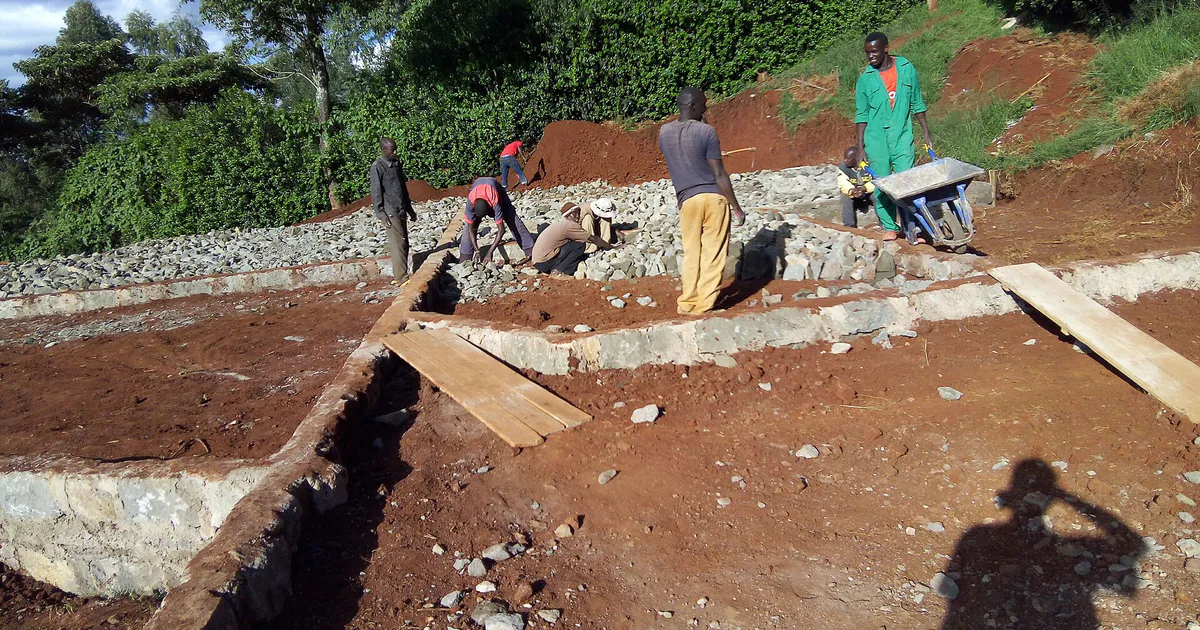
Before you sink savings or a loan into rental units, the question that decides almost everything is where. Build in the wrong place and units sit empty or rent cheap. Build in the right place and they fill before the paint is dry. This guide looks at where to build rentals around Nairobi, ranked using ISHI Homes rent data and the trade-off every developer faces: land cost against rent.
How we ranked the areas
We looked at three things:

- Rent levels from ISHI Homes listings, as of 26 Oct 2026.
- Depth of demand: how many types of tenants each area attracts.
- Land-cost trade-off: whether rents are high enough to justify what land usually costs there.
One caution: our listing numbers per area are small, so the figures are a guide, not a market survey. Land prices change fast and vary plot by plot, so we do not quote them. Get local valuations before buying.
The demand picture
Across all areas, as of 26 Oct 2026, ISHI Homes median rents were:
| Unit type | Median rent | Typical rent plus deposit |
|---|---|---|
| Bedsitter | KES 8,500 | KES 17,000 |
| 1 bedroom apartment | KES 15,750 | KES 31,500 |
| 2 bedroom apartment | KES 28,000 | KES 56,000 |
| 3 bedroom house | KES 45,000 | KES 90,000 |
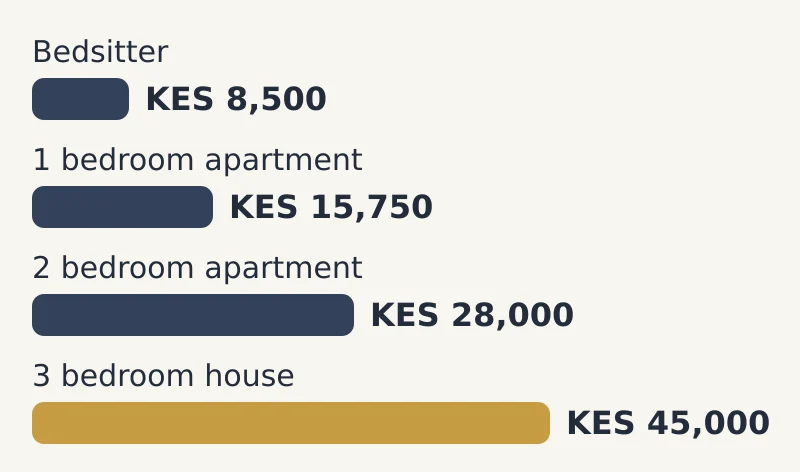
Most listings were bedsitters, 1 bedroom and 2 bedroom apartments. That matches what agents see on the ground: the deepest pool of renters is students, young workers and small families looking for affordable, compact homes.
Where to build rentals around Nairobi: the ranking
1. Ruiru (Toll and surrounding estates)
| Unit | Median rent, as of 26 Oct 2026 |
|---|---|
| Bedsitter | KES 7,750 |
| 1 bedroom | KES 12,500 |
| 2 bedroom | KES 21,250 |
Why it ranks first: Ruiru combines steady commuter demand with land that is generally far cheaper than inside Nairobi. Rents are lower than the all-areas median, but the land-cost side of the sum is usually much kinder, which can give a healthier yield.

What to build: 1 and 2 bedroom apartments for young families and workers commuting into Nairobi.
Watch: water supply in the specific estate, road access in the rains, and distance from the highway. A plot deep in an estate with a muddy road will rent for less.
2. Kahawa Sukari
| Unit | Median rent, as of 26 Oct 2026 |
|---|---|
| Bedsitter | KES 10,000 |
| 1 bedroom | KES 15,750 |
| 2 bedroom | KES 25,000 |
Why it ranks high: rents here sit at or above the all-areas median for bedsitters and 1 bedrooms, with demand from university students, staff and families along Thika Road.
What to build: quality bedsitters and 1 bedrooms, plus some 2 bedrooms for families.
Watch: land is usually dearer than further out, so check that the higher rent covers it. Plan parking, as it is a selling point here.
3. Kahawa Wendani
| Unit | Median rent, as of 26 Oct 2026 |
|---|---|
| Bedsitter | KES 8,500 |
| 1 bedroom | KES 13,250 |
Why it ranks here: strong, steady demand for small units, largely from students and young workers. Units fill quickly.
What to build: bedsitters and 1 bedrooms, well finished and secure.
Watch: tenant turnover is higher with students, which means more re-letting and wear. Budget for regular repainting and repairs. Competition is heavy, so standing out on water, security and finish matters.
4. Roysambu
| Unit | Median rent, as of 26 Oct 2026 |
|---|---|
| Bedsitter | KES 12,000 |
| 1 bedroom | KES 18,250 |
| 2 bedroom | KES 30,000 |
Why it ranks here: the highest rents of the Thika Road areas on our list, and solid demand from people who want to be closer to the city.
What to build: apartments with 1 and 2 bedrooms, built up rather than out.
Watch: land is scarce and expensive, and many areas are already dense. The sums often only work with multi-storey blocks, which bring bigger approvals, costs and risk.
5. Kilimani
| Unit | Median rent, as of 26 Oct 2026 |
|---|---|
| 2 bedroom | KES 71,500 |
| 3 bedroom | KES 120,000 |
Why it is fifth: rents are by far the highest on our list, but so is land, and the market is crowded with new apartment blocks.
What to build: only serious, well-funded apartment projects with lifts, parking, backup power and water.
Watch: high vacancy risk if you price wrong, a demanding tenant market, and a long payback period. This is a developer's market, not a first project.
Land cost against rent: doing the sum
For any plot, work through this before you buy:
- Total cost = land + approvals + construction + connections (water, power, sewer) + finishing.
- Yearly rent = monthly rent per unit x number of units x 12.
- Allow for vacancies, such as one month a year per unit, and for running costs like caretaker pay, repairs, security, management fees and tax.
- Net yearly income = yearly rent minus vacancies and running costs.
- Yield = net yearly income divided by total cost.
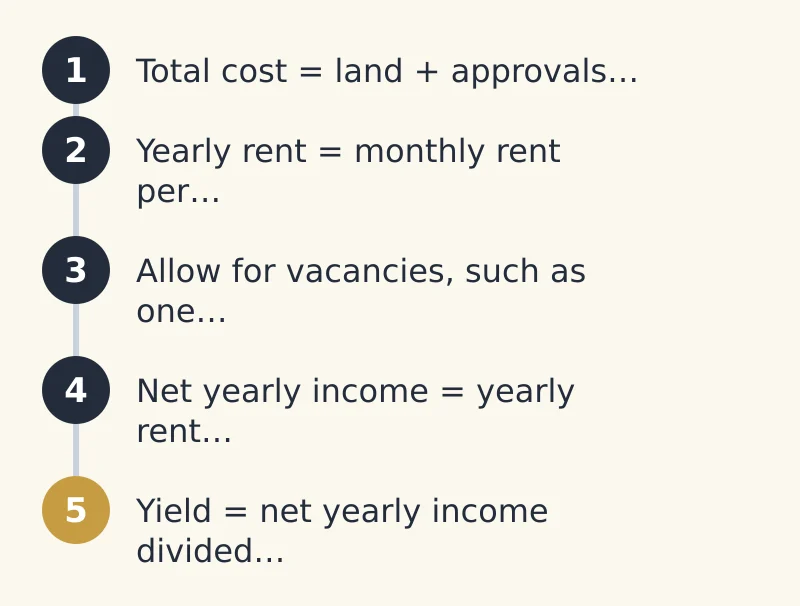
Compare that yield across two or three areas. A cheaper area with lower rent often beats a pricey one, because the land saving is bigger than the rent gap.
Checks before you buy a plot
- Title and search. Confirm ownership at the lands registry with a lawyer.
- Zoning and approvals. Ask the county planning office what can be built there and how many floors.
- Water. Is there mains supply, or will you need a borehole and storage?
- Power and sewer. Ask about connections and costs.
- Roads. Visit in the rainy season.
- Competition. Count the new blocks going up nearby and ask caretakers about vacancies.
Plan management from day one
A good location fills units once. Good management keeps them full. Decide early how you will collect rent, handle repairs, screen tenants and track arrears, especially if you live far from the site.
See ISHI in action
ISHI is property management software for Kenyan landlords and agencies. It covers M-Pesa rent collection, invoices and reminders, tenant and owner portals, maintenance and reports, so a new block can run smoothly from the first tenant.
Book a free demo at www.ishi.digital/contact, call 0116888777 or email hello@ishi.digital.
Questions people ask
Where is the best place to build rental houses in Nairobi?
The best place balances strong tenant demand with land you can afford. Commuter areas along Thika Road, such as Ruiru and the Kahawa estates, offer steady demand for bedsitters and 1 and 2 bedroom units at lower land cost than the inner city.
Which rental units are most in demand around Nairobi?
Bedsitters, 1 bedroom and 2 bedroom apartments make up most listings on ISHI Homes. They suit the largest group of renters, such as students, young workers and small families.
Is it better to build bedsitters or 2 bedroom units?
Bedsitters fill fast and suit students and single workers, but tenants move often. 2 bedroom units attract families who stay longer and pay more per unit, but cost more to build.
How do I compare land cost and rent when choosing where to build?
Estimate the total cost of land and building, then the yearly rent after vacancies and running costs. Divide the second by the first to get your yield, and compare it across areas.
What approvals do I need to build rentals in Kenya?
You will typically need approved building plans from the county and other approvals depending on the site. Check with your county planning office and use a registered architect.
Keep reading
Bedsitters vs one bedrooms: which earns landlords more?
Bedsitters bring in more rent per square metre, but they empty out more often. We compare yield and vacancy using ISHI Homes rent data so you can choose the right unit mix for your plot.
18 November 2026 · 6 min read
Is buy-to-let still worth it in Nairobi? Yields, vacancy and hidden costs
A plain guide for landlords on whether buy-to-let in Nairobi still pays: how to work out real yield, what an empty month costs you, and the costs most people forget.
1 November 2026 · 6 min read
Rental yield in Kenya: how to calculate gross and net yield
A simple guide for landlords and agencies on calculating rental yield in Kenya, with worked gross and net yield examples using ISHI Homes rent data.
25 October 2026 · 6 min read