
Is buy-to-let still worth it in Nairobi? Yields, vacancy and hidden costs
A plain guide for landlords on whether buy-to-let in Nairobi still pays: how to work out real yield, what an empty month costs you, and the costs most people forget.
Many Kenyans still see a rental unit as the safest way to grow money. But is buy to let in Nairobi still worth it? The honest answer is: it depends on the price you pay, how often the unit sits empty, and the costs you remember to count. This guide shows you how to check the numbers before you buy.
What buy-to-let means
Buy-to-let means buying a house or apartment so you can rent it out. You earn in two ways:
- Rent - money that comes in every month.
- Capital growth - the property may be worth more when you sell.
Rent pays the bills today. Capital growth is never guaranteed, so this guide focuses on rent.
What rents look like right now
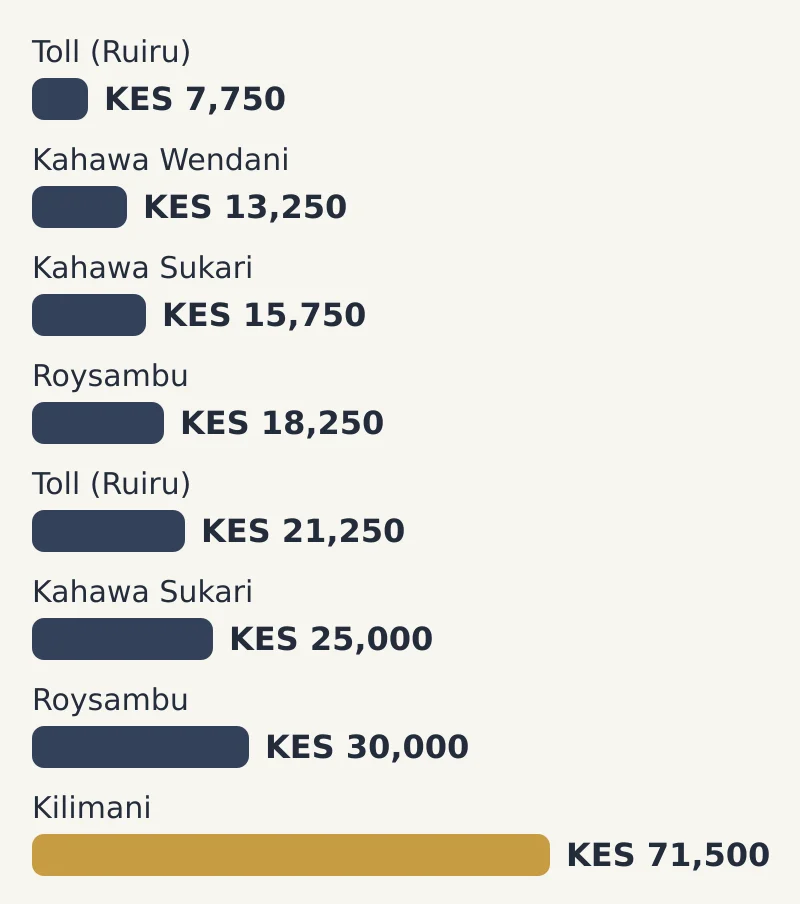
Here are median rents from ISHI Homes listings, as of 26 Oct 2026. The median is the middle figure, so half the listings are above it and half below. Some areas have only a few listings, so treat these as a rough guide, not a full market survey.

| Area | Unit | Median rent a month |
|---|---|---|
| Toll (Ruiru) | Bedsitter | KES 7,750 |
| Kahawa Wendani | 1 bedroom | KES 13,250 |
| Kahawa Sukari | 1 bedroom | KES 15,750 |
| Roysambu | 1 bedroom | KES 18,250 |
| Toll (Ruiru) | 2 bedroom | KES 21,250 |
| Kahawa Sukari | 2 bedroom | KES 25,000 |
| Roysambu | 2 bedroom | KES 30,000 |
| Kilimani | 2 bedroom | KES 71,500 |
Across all areas, the median 2 bedroom apartment on ISHI Homes rents for KES 28,000 a month, a 1 bedroom for KES 15,750 and a bedsitter for KES 8,500 (as of 26 Oct 2026).
How to work out rental yield
Yield is the rent you earn in a year, shown as a percentage of what you paid for the property.

- Gross yield = yearly rent / price paid x 100
- Net yield = (yearly rent - all costs) / price paid x 100
Gross yield looks good on a sales brochure. Net yield is what actually reaches your pocket. Always ask for, and work out, the net figure.
A worked example
Say you buy a 2 bedroom apartment for KES 6,000,000 (an example price only) and rent it at KES 28,000 a month.
- Yearly rent if full all year: KES 336,000
- Gross yield: 5.6%
Now make it real:
| Item | Yearly amount |
|---|---|
| Rent for 11 months (1 month empty) | KES 308,000 |
| Service charge (say KES 3,000 a month) | - KES 36,000 |
| Repairs and upkeep (say) | - KES 20,000 |
| Management fee (say 10% of rent collected) | - KES 30,800 |
| Monthly rental income tax (7.5% of gross rent) | - KES 23,100 |
| What you keep | KES 198,100 |
Net yield: about 3.3%. That is very different from the 5.6% you started with. If you used a loan, the interest comes out of that KES 198,100 too, and it can easily wipe it out.
Check the price before you check the rent
A quick test: what price would you need to pay to get a certain gross yield? Below we use 8% gross as an example target (yearly rent x 12.5). It is not a rule, just a way to compare.
| Area and unit | Yearly rent | Price for 8% gross yield |
|---|---|---|
| Toll (Ruiru) bedsitter | KES 93,000 | KES 1,162,500 |
| Kahawa Wendani 1 bedroom | KES 159,000 | KES 1,987,500 |
| Roysambu 1 bedroom | KES 219,000 | KES 2,737,500 |
| Kahawa Sukari 2 bedroom | KES 300,000 | KES 3,750,000 |
| Roysambu 2 bedroom | KES 360,000 | KES 4,500,000 |
| Kilimani 2 bedroom | KES 858,000 | KES 10,725,000 |
If the asking price is far above these figures, the rent alone may not justify the buy. You would be betting on the property gaining value.
Vacancy: the silent cost
Vacancy means the unit is empty and earning nothing. Each empty month costs you about 8% of a full year's rent. Two empty months cost about 17%.
What drives vacancy:
- Too much supply. If many new blocks are going up nearby, tenants have choice and you may have to cut rent.
- Wrong unit for the area. Students and young workers often want bedsitters and 1 bedrooms. Families want space and parking.
- Slow re-letting. Painting, repairs and viewings between tenants take time.
- Poor upkeep. Tenants leave buildings with broken water, lighting or security.
How to check before you buy:
- Walk the area and count "To Let" signs.
- Ask caretakers how long units take to fill.
- Search ISHI Homes for your area and unit type to see how many similar units are listed.
The costs people forget
Beyond the price and the rent, budget for these:
When buying
- Stamp duty (a tax paid when the property changes hands)
- Lawyer's fees and valuation fees
- Loan arrangement fees, if you borrow
- Fittings: water tanks, meters, curtain rails, kitchen fittings
Every year
- Service charge, if it is in a managed block
- Land rates to the county, and ground rent if the land is leasehold (land you hold for a set number of years)
- Building insurance
- Monthly rental income tax to KRA
- Common area costs: security, cleaning, garbage, water pumps
Now and then
- Repainting and repairs between tenants
- Big repairs: roof, plumbing, borehole pumps
- Rent arrears - rent a tenant owes but has not paid. Even a few bad tenants can hurt a whole year.
- Legal costs if you need to remove a tenant
Off-plan risk
Buying off-plan (before the building is finished) can be cheaper, but delays mean you pay without earning rent. Check the developer's record and approvals carefully.
So, is it still worth it?
Buy-to-let can still work in Nairobi, but only when:
- The price makes sense against real local rents.
- You plan for at least one empty month a year.
- You count every cost, including tax and repairs.
- You collect rent on time and keep good tenants.
It works less well when you overpay, borrow heavily, or buy a unit type the area does not want. Run the numbers for your exact unit and be honest about them.
Keep vacancy low and rent coming in
Much of the gap between gross and net yield comes down to management: chasing arrears, tracking repairs and filling empty units fast. ISHI property management software helps landlords and agencies collect rent, send reminders, track expenses and see which units are empty, all in one place. You can also list vacant units on ISHI Homes to reach tenants searching across Nairobi and its commuter towns.
Want to see it in action? Book a free demo at www.ishi.digital/contact, call 0116888777 or email hello@ishi.digital.
Questions people ask
What is a good rental yield in Nairobi?
There is no fixed number, but always judge by net yield, which is rent after vacancy, service charge, repairs, fees and tax. Compare that net figure with what your money could earn elsewhere at lower risk.
How do I calculate rental yield?
Gross yield is yearly rent divided by the price you paid, times 100. Net yield subtracts all yearly costs from the rent first, so it shows what you actually keep.
Do landlords in Kenya pay tax on rent?
Yes. Resident landlords earning rent from residential property pay monthly rental income tax to KRA on gross rent. Check the current rate and thresholds on the KRA website or with a tax adviser.
Which units rent fastest in Nairobi's commuter towns?
Smaller units like bedsitters and 1 bedrooms are common in areas such as Kahawa Wendani and Toll (Ruiru), where many tenants are students and young workers. Check current listings for your area before you buy.
How much does a vacant month cost a landlord?
Each empty month costs about 8% of a full year's rent, and service charge and other bills still need paying. That is why planning for vacancy matters.
Is buying off-plan a good idea for buy-to-let?
It can be cheaper, but delays mean you pay without earning rent. Check the developer's track record, approvals and title before you commit.
Keep reading

Rental yield in Kenya: how to calculate gross and net yield
A simple guide for landlords and agencies on calculating rental yield in Kenya, with worked gross and net yield examples using ISHI Homes rent data.
25 October 2026 · 6 min read
eTIMS for landlords and property managers: what it means for rent and commission invoices
A plain guide to KRA's eTIMS for Kenyan landlords and agencies. Who needs to issue eTIMS invoices, how it touches rent, service charge and commission, and how to get your records ready.
4 November 2026 · 5 min read
Rainy season checklist for landlords: roofs, gutters, drainage and damp
A practical rainy season checklist for Kenyan landlords. What to inspect on the roof, gutters, drains and walls before and during the rains, and how to handle tenant reports fast.
3 November 2026 · 5 min read