
How to Start a Property Management Company in Kenya
A step-by-step guide to starting a property management company in Kenya. It covers registration, licences, pricing your services, handling client money and winning your first landlords.

Many Kenyan landlords are busy, live abroad or simply do not want to chase rent every month. That creates room for a good manager. If you want to start a property management company in Kenya, this guide walks you through the main steps: registering the business, getting licensed, setting your prices and finding your first clients.
What a property management company does
A property manager looks after rental property for a landlord in return for a fee. The usual work includes:
- Finding and screening tenants
- Signing tenancy agreements (the contract between landlord and tenant)
- Collecting rent and following up on arrears (unpaid rent)
- Arranging repairs and maintenance
- Handling move-ins, move-outs and deposit refunds
- Sending the landlord monthly statements and paying out their money
You do not have to offer everything on day one. Some new firms start with letting only (finding tenants), then grow into full management.
Step 1: Choose your focus
Before you register anything, decide who you will serve. A clear focus makes marketing easier.
Things to decide:
- Type of property: bedsitters and 1 bedroom blocks, family apartments, standalone houses, or commercial space.
- Area: pick a few neighbourhoods you know well and can reach quickly. Landlords trust a manager who is close by.
- Service level: full management, letting only, or rent collection only.
Rent levels differ a lot by area, and your income depends on the rent you manage. Here is what ISHI Homes listings showed as of 25 Oct 2026:
| Area | Unit type | Median rent a month |
|---|---|---|
| Toll (Ruiru) | Bedsitter | KES 7,750 |
| Kahawa Wendani | 1 bedroom | KES 13,250 |
| Kahawa Sukari | 2 bedroom | KES 25,000 |
| Roysambu | 2 bedroom | KES 30,000 |
| Kilimani | 2 bedroom | KES 71,500 |
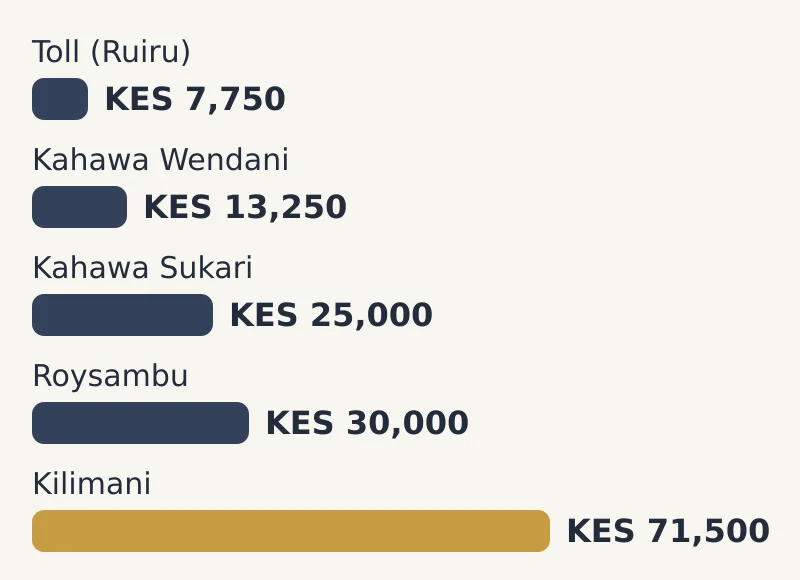
Lower-rent areas often have many units in one building, so volume matters. Higher-rent areas have fewer units but larger fees per unit.
Step 2: Register the business
You need a legal business before you can sign contracts with landlords.

Common options:
- Sole proprietorship: you own the business alone. Quick and cheap, but you are personally responsible for its debts.
- Partnership: two or more people own it together.
- Limited company: the company is a separate legal person, which protects your personal assets. Landlords and banks often take it more seriously.
Registration is done through the Business Registration Service on the eCitizen portal. You will then need:
- A KRA PIN for the business, so you can file taxes
- A business bank account
- Your company documents ready to show clients
If you are unsure which structure fits, a short meeting with an accountant or lawyer is money well spent.
Step 3: Get the right licences
This is where many new managers cut corners. Do not.
- Estate agent registration: in Kenya, people who manage or let property for others for a fee are expected to be registered with the Estate Agents Registration Board (EARB). Check the current requirements, qualifications and fees with the Board directly.
- County business permit: most counties require a single business permit for your office. Ask your county offices what applies and how much it costs.
- Data protection: you will hold tenants' ID numbers, phone numbers and payment records. Check whether you need to register with the Office of the Data Protection Commissioner, and keep that data safe.
- Tax: you will pay tax on your business income, and may need to register for VAT once your turnover passes a certain level. Ask an accountant to confirm what applies to you.
You may also want professional indemnity insurance, which covers you if a client claims you made a costly mistake.
Step 4: Set up how you handle money
Trust is everything in this business. Landlords hand you their income, and tenants hand you their deposits.

Good habits from day one:
- Keep landlords' rent and tenants' deposits in a separate client account, never mixed with your own business money.
- Use a paybill or bank collection account so every rent payment is traceable.
- Give a receipt for every payment.
- Send each landlord a clear monthly statement: rent collected, arrears, expenses and your fee.
- Pay landlords on a fixed date every month.
Step 5: Price your services
Most Kenyan managers charge in one or more of these ways:
| Fee type | How it works |
|---|---|
| Management fee | A percentage of rent actually collected each month |
| Flat fee per unit | A fixed amount per unit per month, useful for low-rent blocks |
| Letting fee | A one-off fee when you find a new tenant |
| Extra services | Charges for things like supervising major repairs |
A percentage of rent collected (not rent due) is popular because it shows the landlord you only earn when they earn.
Example: a block of 20 one-bedroom units at KES 15,750 a month (the ISHI Homes median as of 25 Oct 2026) brings in KES 315,000 a month if fully let. At an example fee of 8%, you would earn KES 25,200 a month from that one building.
Tips for setting your price:
- Ask what other managers in your area charge, then decide where you fit.
- Do not compete only on being cheapest. Win on reporting, speed and honesty.
- Write every fee into your management agreement so there are no surprises.
Step 6: Prepare your contracts
You need two main documents:
- Management agreement: between you and the landlord. It should set out your duties, fees, how and when you pay the landlord, how repairs are approved, and how either side can end the contract.
- Tenancy agreement: between the landlord and tenant. It covers rent, deposit, due dates, notice periods and house rules.
Have a lawyer review your templates once. You can then reuse them.
Step 7: Win your first clients
Your first two or three landlords are the hardest. After that, referrals help a lot.
Ways to find them:
- Start with people you know: family, friends and church or chama members who own rentals.
- Walk your target area: look for buildings with "To Let" signs, poor upkeep or many empty units. Ask to speak with the owner.
- Target diaspora landlords: Kenyans abroad often struggle to manage property from far away. Clear online statements matter a lot to them.
- Offer a letting-only trial: fill a few empty units first. If you do it well, the landlord may hand over full management.
- List vacancies online: advertising your units on rental sites like ISHI Homes brings tenants to you faster, which is what landlords care about.
- Partner with others: caretakers, contractors, lawyers and surveyors often hear about landlords who need help.
When you meet a landlord, bring a sample monthly statement. Showing exactly what they will receive is more convincing than any promise.
Step 8: Put good systems in place early
Managing one building on a notebook and spreadsheet is possible. Managing ten is not. As you grow, you need:
- A record of every unit, tenant and lease
- Automatic rent invoices and reminders
- Payments matched to the right tenant
- Arrears tracking
- Maintenance requests logged and followed up
- Monthly landlord statements produced in minutes, not days
Property management software does this for you and makes a small team look like a big one.
Common mistakes to avoid
- Mixing client money with your own
- Working without a signed management agreement
- Taking on too many areas too quickly
- Promising landlords full occupancy you cannot deliver
- Ignoring licensing until a client or regulator asks
See ISHI in action
ISHI is property management software built for Kenyan landlords and agencies. It helps you track units and tenants, collect rent, follow up on arrears and send clear statements to landlords.
Book a free demo at www.ishi.digital/contact, call 0116888777 or email hello@ishi.digital.
Questions people ask
Do I need a licence to start a property management company in Kenya?
Yes. People who manage or let property for others for a fee are expected to register with the Estate Agents Registration Board, and you will usually need a county business permit too. Confirm current requirements with the Board and your county.
How much do property managers charge in Kenya?
Many charge a percentage of the rent they collect each month, plus a one-off fee for finding new tenants. Rates vary by area and service, so compare local managers before setting yours.
Can I start a property management business with little money?
Yes. Many people start from home with one or two buildings, focusing on registration, licensing, good contracts and simple software. You can add an office and staff as your client list grows.
Should I register as a sole proprietor or a limited company?
A sole proprietorship is quicker and cheaper, but a limited company protects your personal assets and often looks more trustworthy to landlords. An accountant can help you choose.
How do I get my first landlord clients?
Start with people you know, walk your target area looking for empty or poorly run buildings, and reach out to diaspora landlords. Offering to fill vacant units first is a good way to earn trust.
Do I need software to manage rental properties?
Not for one small building, but it quickly becomes hard to track rent, arrears and statements by hand. Property management software like ISHI saves time and gives landlords clear reports.
Keep reading

Property management fees in Kenya: what agencies charge
A plain guide to property management fees in Kenya: common ranges for management and letting fees, the extra charges to watch for, and how to work out what a fair deal looks like for your building.
25 October 2026 · 7 min read
Rent reminder messages that get paid: SMS and WhatsApp templates
Copy-and-paste rent reminder templates in English and Kiswahili for SMS and WhatsApp, from a friendly early nudge to a final arrears notice, plus a simple sending schedule.
25 October 2026 · 7 min read
Monthly rental income tax in Kenya: who pays, how much and how to file
A plain guide to monthly rental income tax in Kenya for landlords and agencies: who it covers, the current rate, worked examples using real rents, and how to file and pay on iTax.
25 October 2026 · 6 min read