
How to Get Landlord Clients: Channels and a Pitch That Works
A practical guide for Kenyan property agencies on where to find landlords, what to say to them, and how to turn a first meeting into a signed management deal.

Every agency needs a steady flow of new buildings to manage. If you want to get landlord clients without spending a fortune on adverts, you need two things: the right places to meet landlords, and a pitch that speaks to their real worries. This guide covers both.
Start by knowing who you want
Before you chase anyone, decide what kind of landlord suits your agency. A vague target wastes time.
Ask yourself:
- What type of property? Bedsitters and 1 bedroom blocks, family apartments, or high-end units?
- Which areas? Pick areas you can reach quickly when a tenant calls about a burst pipe.
- What size? A single building with 20 units may be easier to win and serve than many scattered houses.
A clear focus makes your pitch sharper. A landlord with 30 bedsitters near a university cares about fast re-letting. A landlord with a few large units in an upmarket area cares about tenant quality and care of the property.
The best channels to get landlord clients
You do not need every channel. Pick two or three and do them well.
1. Referrals from your current landlords
Happy landlords know other landlords. Many belong to the same chamas (investment groups), churches or family networks.
- Ask directly after a good month: "Do you know anyone who struggles with their building?"
- Thank them when a referral signs. A simple thank-you, a small gift or a month of reduced fees works.
- Make it easy: give them a short message they can forward on WhatsApp.
2. Walk your target area
This is old-fashioned and it still works.
- Look for buildings with "To Let" signs that stay up for weeks. Long vacancies mean a landlord who is losing money.
- Talk to caretakers. They know who owns the building and whether the owner is frustrated.
- Note new buildings going up. Developers often need someone to fill and run units once construction ends.
Keep a simple list: building, location, number of units, owner contact, date you visited, next step.
3. Landlords who live far away
Landlords who live upcountry or abroad cannot check on their buildings often. They worry about rent being collected, money being lost and repairs being ignored.
- Reach them through their relatives, caretakers and community groups.
- Stress clear monthly reports and easy online payments. Trust is the whole sale here.
4. Online presence
Many landlords search online before they call an agency.
- Google Business Profile: set it up with your office location, phone number and real reviews.
- WhatsApp Business: add a catalogue of your services and a short description.
- Facebook and local groups: share useful tips (how to reduce vacancies, how to handle arrears) instead of only adverts.
- Listing sites: list your vacant units on sites like ISHI Homes. Landlords see your listings and judge how well you market property.
5. Partnerships
Other professionals meet landlords every day. Build friendly links with:
- Lawyers who handle property sales and transfers
- Surveyors and valuers
- Contractors, architects and hardware owners
- Bank and SACCO staff who handle property loans
Offer to refer work back to them. A two-way relationship lasts longer.
What landlords actually worry about
A good pitch starts with the landlord's problem, not your company history. Most landlords lose sleep over a few things:

| Worry | What it costs them |
|---|---|
| Empty units | Lost rent every month a unit sits vacant |
| Late rent and arrears | Cash flow problems, loan repayments missed |
| Tenant disputes | Stress, phone calls at night, lost time |
| Poor records | Not knowing who paid what, money going missing |
| Repairs | Small problems becoming big, costly ones |
Find out which of these hurts the landlord in front of you. Then talk mostly about that.
A simple pitch that works
Keep it short. Here is a structure you can use in person or on the phone.
1. Ask before you tell. "How many units do you have? How many are empty right now? How is rent collection going?"
2. Repeat the problem back. "So you have four empty units and two tenants are behind by two months. That is a lot of money not coming in."
3. Show the cost in shillings. Use real market numbers. For example, as of 26 Oct 2026, the median rent for a bedsitter on ISHI Homes listings across all areas was KES 8,500 a month. If a landlord has four empty bedsitters at that rent, that is about KES 34,000 lost every month.
4. Explain what you will do. Be specific:
- List and market empty units within days
- Screen tenants before they move in
- Collect rent and follow up on arrears
- Handle repairs and tenant complaints
- Send a clear monthly statement
5. Show proof. Share a sample monthly report, a short story about a building you filled, or a reference from a current landlord.
6. Make starting easy. Offer to start with one building or a trial period. A small "yes" is easier than a big one.
Use local rent data to earn trust
Landlords often price units too high or too low. Showing them local numbers proves you know the market. As of 26 Oct 2026, ISHI Homes listings showed these median rents:
| Area | Unit | Median rent |
|---|---|---|
| Kahawa Wendani | Bedsitter | KES 8,500 |
| Kahawa Sukari | 2 bedroom apartment | KES 25,000 |
| Toll (Ruiru) | 2 bedroom apartment | KES 21,250 |
| Roysambu | 1 bedroom apartment | KES 18,250 |
| Kilimani | 2 bedroom apartment | KES 71,500 |
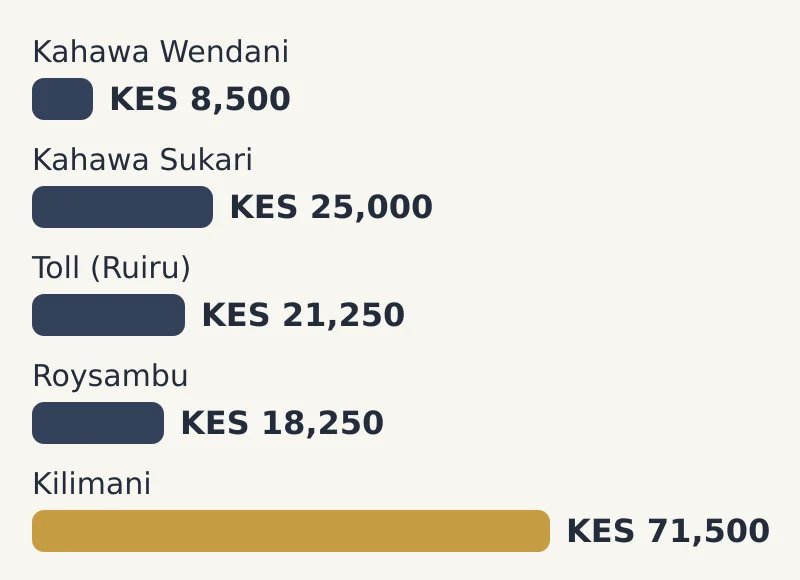
These are based on a small number of listings, so use them as a starting point, not a final price. Combine them with what you see on the ground.
Handling common objections
You will hear the same doubts again and again. Prepare short, honest answers.
- "Agents steal money." Offer full transparency. Tenants pay into a clear system, and the landlord can see every payment and every expense.
- "Your fee is too high." Compare your fee to the rent lost from one empty unit for one month, or from one tenant who never pays.
- "My caretaker handles it." Keep the caretaker. Position your agency as support for them, with better records and someone to chase arrears.
- "I will think about it." Agree on a date to follow up, and send a short summary of what you discussed the same day.
Follow up, then follow up again
Most deals are not closed in the first meeting. A landlord may need weeks to decide.
- Send a thank-you message within 24 hours.
- Share something useful a week later, such as local rent figures or a tip on reducing vacancies.
- Check in when you see their units still empty.
- Keep notes so you never ask the same question twice.
Keep the clients you win
The cheapest new client is the one you do not lose. Landlords who stay become your best referral source.
- Send statements on time, every month.
- Tell them about problems early, before they hear from tenants.
- Review rent and vacancy with them a few times a year.
Good tools make this much easier. When rent, receipts, arrears and repairs are all in one place, you can report clearly and handle more buildings with the same team.
See ISHI in action
ISHI helps agencies and landlords collect rent, track arrears, manage tenants and send clear reports, so you can show new landlords exactly how you will run their buildings. Book a free demo at www.ishi.digital/contact, call 0116888777 or email hello@ishi.digital.

Questions people ask
How do property agents get landlord clients in Kenya?
The most reliable channels are referrals from current landlords, walking your target area to find buildings with long vacancies, building an online presence, and partnering with lawyers, valuers and contractors who meet landlords often.
What should I say when pitching to a landlord?
Start by asking about their empty units and rent collection, then show the cost of those problems in shillings. Explain exactly what you will do, share proof such as a sample report, and offer an easy way to start, like managing one building first.
How do I convince a landlord who does not trust agents?
Offer full transparency with a system where the landlord can see every payment and expense. A reference from a current landlord and a sample monthly statement also help build trust.
Should I offer a trial to new landlord clients?
A trial period or starting with one building lowers the risk for the landlord and makes it easier to say yes. Once they see results, they are more likely to hand over more units.
How can I keep landlord clients long term?
Send accurate statements on time, report problems early and review rent and vacancy with them regularly. Happy landlords also refer other landlords to you.
Keep reading

How to Start a Property Management Company in Kenya
A step-by-step guide to starting a property management company in Kenya. It covers registration, licences, pricing your services, handling client money and winning your first landlords.
25 October 2026 · 7 min read
Property management fees in Kenya: what agencies charge
A plain guide to property management fees in Kenya: common ranges for management and letting fees, the extra charges to watch for, and how to work out what a fair deal looks like for your building.
25 October 2026 · 7 min read
eTIMS for landlords and property managers: what it means for rent and commission invoices
A plain guide to KRA's eTIMS for Kenyan landlords and agencies. Who needs to issue eTIMS invoices, how it touches rent, service charge and commission, and how to get your records ready.
4 November 2026 · 5 min read