
Rental vacancy season in Kenya: when vacancies spike, and how to prepare
Vacancies in Kenyan rentals tend to bunch around the same times each year. The common seasonal patterns, why they happen, and a checklist to fill units faster when they come.

A unit that sits empty for one month costs you a twelfth of its yearly rent, and you still pay the caretaker, the security and the service costs. Many landlords notice that vacancies do not come evenly. They bunch. Knowing your rental vacancy season, and preparing for it, can save you months of lost rent each year.
The rental vacancy season in Kenya: common patterns
Every building is different, but many Kenyan landlords and agents describe similar patterns.

January and early in the year
This is often the busiest time for moves. The reasons stack up:
- School fees are due, so some families move to cheaper houses
- Holiday spending has stretched budgets
- New jobs and transfers start in the new year
- People return from upcountry and decide to change house
Expect more notices in December and more move-outs at the end of December and January.
Month-end, every month
Most tenants move at the end of a month, because notice periods and rent dates line up there. The last week and first week of each month are your busiest viewing times.
College and university intake periods
If your building is near a campus, intake and end-of-semester periods bring waves of students moving in and out. Bedsitters and one bedrooms near campuses feel this most.
Mid-year and other local cycles
Some areas have their own rhythm: a factory that hires on contracts, a business park that opens, or a road that changes the commute. Watch what happens in your area, not only the national pattern.
Find your own pattern
The best guide is your own records. Go back over the last two or three years and note:

- The month each tenant gave notice
- The month they left
- How long each unit stayed empty
- What type of unit it was
Many landlords are surprised. They find, for example, that their bedsitters turn over in January while their two bedrooms are steady all year. Once you see the pattern, you can plan around it.
What an empty month really costs
Here is a rough view using ISHI Homes median rents across all areas, as of 26 Oct 2026:
| Unit type | Median rent a month | Rent lost if empty one month | Rent lost if empty two months |
|---|---|---|---|
| Bedsitter | KES 8,500 | KES 8,500 | KES 17,000 |
| 1 bedroom apartment | KES 15,750 | KES 15,750 | KES 31,500 |
| 2 bedroom apartment | KES 28,000 | KES 28,000 | KES 56,000 |
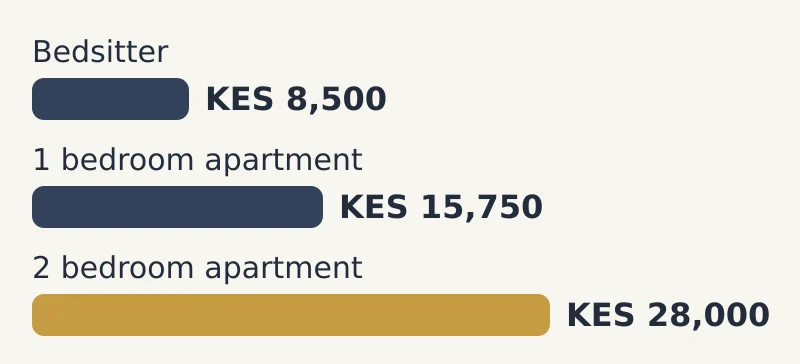
Now compare that with a small discount. Dropping a 2 bedroom from KES 28,000 to KES 27,000 costs KES 12,000 over a year. Leaving it empty for one month costs KES 28,000. A fair price that fills fast often beats a high price that waits.
Preparation checklist
Work through this a month or two before your busy season.
Keep the tenants you have
- Talk about renewals early. Ask tenants with leases ending soon whether they plan to stay, well before the busy season.
- Fix the small things. A slow repair is a common reason good tenants leave.
- Review rent rises carefully. A big rise in January, when budgets are tight, can push out a tenant who would otherwise stay.
Get units ready fast
- Line up fundis for painting, plumbing and cleaning before the rush, when they are easier to book.
- Keep basic supplies such as paint, bulbs, locks and taps on hand.
- Aim to turn a unit around within days, not weeks, after a tenant leaves.
Market before the unit is empty
- Advertise as soon as you get notice. Ask the outgoing tenant to allow viewings at agreed times.
- Have a ready-made listing for each unit type with up-to-date photos, rent, deposit and full move-in cost.
- Set viewing hours and tell the caretaker.
Price with the market
- Check similar units nearby before setting rent for the new tenant.
- Be clear about every cost up front: rent, deposit, water, service charge.
Screen well, even when busy
- Do not rush the checks just to fill a unit. A bad tenant in January can cost you more than an empty month.
- Use the same checks for everyone: ID, references, proof of income.
Track it
- Record each vacancy: when notice came, when the unit was ready, when it was let.
- Review after each busy season. What worked? Where did days get lost?
Quiet seasons are your chance
When fewer tenants are moving, use the time to:
- do bigger repairs and repainting
- update photos and listings
- review rent against the market
- clean up tenant records and contacts
The landlords who fill units fastest in January are usually the ones who prepared in November.
See ISHI in action
ISHI is property management software for Kenyan landlords and agencies. With M-Pesa rent collection, invoices and reminders, tenant and owner portals, maintenance tracking and reports in one place, it is easier to see which units are coming up empty and act early.
Book a free demo at www.ishi.digital/contact, call 0116888777 or email hello@ishi.digital.
Questions people ask
When do most tenants move in Kenya?
Many landlords see more moves around the start of the year, at month-end, and around college intakes near campuses. Your own records are the best guide for your building.
Why do vacancies go up in January?
School fees, holiday spending and new jobs all hit at once. Some tenants move to cheaper houses, others move closer to new work or school.
How can I reduce vacancies in my rental property?
Talk to tenants about renewals early, fix units quickly between tenants, price close to the market, and advertise before the unit is empty.
Should I lower rent to fill a vacant unit?
Sometimes. One month empty can cost more than a small discount for a year. Compare your rent with similar units nearby before deciding.
How early should I advertise a unit that is about to become vacant?
As soon as you receive notice. Most tenants give about a month, which is enough time to find a new tenant if you start at once.
Keep reading
How to price rent with area data, not guesswork
Price too high and your unit sits empty. Price too low and you lose money every month for years. A step-by-step method for Kenyan landlords to set rent using area data and comparable listings.
21 November 2026 · 5 min read
How to write a rental listing description that gets enquiries
Most rental listings say too little. A step-by-step way for Kenyan landlords and agents to write a listing description that answers tenants' questions, with before-and-after examples.
13 November 2026 · 5 min read
Rental listing photos that get viewings, taken with a phone
Good rental listing photos fill units faster, and a phone is all you need. A room-by-room shot list, simple lighting tips and the mistakes that make house hunters scroll past.
5 November 2026 · 5 min read